


All Products
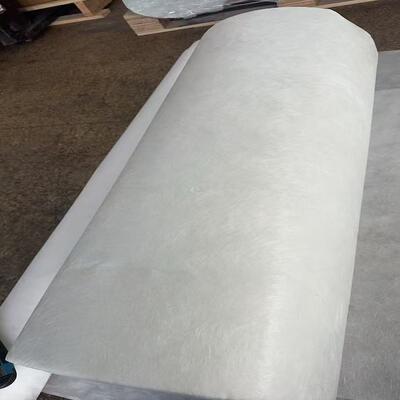
Fiberglass surface veil, also known as fiberglass surface mat or fiberglass surface tissue, is thin non‑woven E‑glass for FRP. It delivers fast resin wet‑out, smooth pinhole‑free surface

| Place of Origin | CHINA |
|---|---|
| Certification | ISO 9000 |
| Model Number | EMS 30 |
| Minimum Order Quantity | 5000 square meter |
| Price | negotiatable |
| Packaging Details | The roll is wrapped up with plastic film and then packed in a woven bag. Usually 9 rolls a pallet, and 10 pallets in a 20' container. If without pallet package, a container could hold about 10 MT |
| Delivery Time | 7 DAYS |
| Payment Terms | T/T, L/C |
| Supply Ability | 10,0000 meters A WEEK |
Product Details
| Non-metallic Product | Surfact Mat | Color | White |
|---|---|---|---|
| Width | 1000mm | Character | Easy Wet-out And Smooth Surface For FRP Process |
| Unit Weight | 30G | Charateristic | Light And Smooth |
Product Description
Introduction:
Fiberglass surface veil, also known as fiberglass surface mat or fiberglass surface tissue, is an ultra‑thin non‑woven E‑glass material for FRP laminates. With evenly spread short glass fibers and low binder content, it delivers fast resin wet‑out and great drape over complex curved molds. It forms a resin‑rich top layer to hide fabric print‑through, creating a smooth, pinhole‑free surface for gel‑coat or painting, while improving long‑term corrosion and weather resistance. Available in multiple GSM grades, this surfacing veil suits hand lay‑up, filament winding and pultrusion for FRP pipes, tanks, yacht parts and composite profiles.

Features:
● Solve the problems of easy break, wrinkle and other symptoms when the polyester veil is separately moulding
●Reduce the workload of laying, improve production efficiency.
●Fiberglass surface mat absorbs resin fast, the product surface is smooth.
Application:
● Compatiable with reinforeced unsaturated polyester resin, vinlylester resin, epoxy resin, phenolic resin and polyurethane resin etc.
● Forming process includes pultrusion, RTM, continuous plate process etc.
● The typical end-use applications are PU pultruded profile, antenna radome, cable tray, panel etc.
Recommended Products
-
VIDEO